Reduced Friction
Clear UI text guided customers through new billing model
This project demonstrates integrated console UX and documentation design for ROSA with hosted control planes (HCP), a new Red Hat OpenShift deployment model launched in Q2 2023. I designed console UI text and comprehensive user documentation in parallel, treating them as components of a unified product experience.
The project required close collaboration with AWS and Red Hat product teams to standardize terminology, design console workflows for a new AWS Marketplace billing model, and ensure consistency across AWS console, Red Hat console, and documentation surfaces.
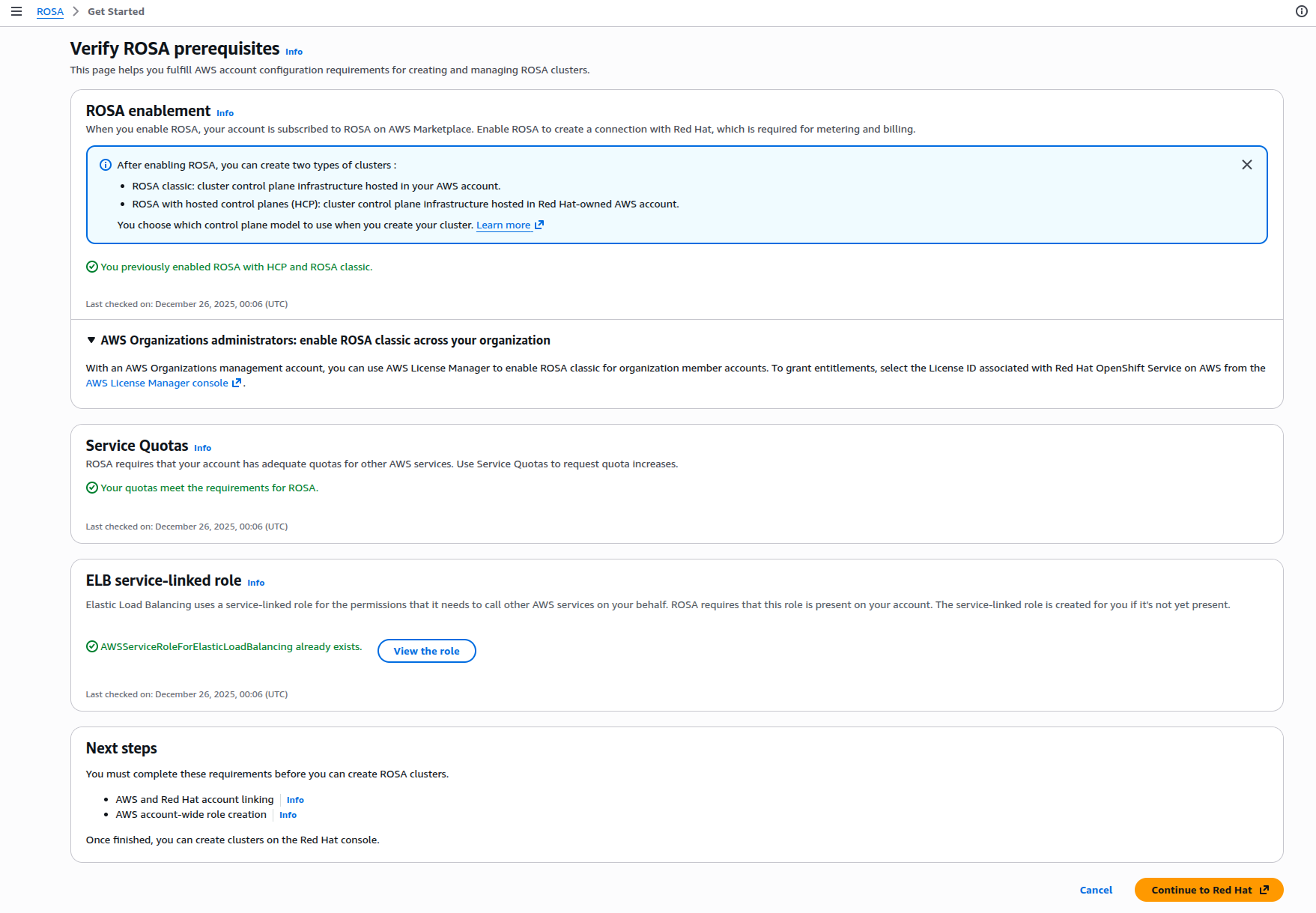 ROSA console get started page guiding customers through enablement workflow
Red Hat OpenShift Service on AWS (ROSA) was launching a new cluster deployment model called ROSA with hosted control planes (HCP). This architecture offered significant customer benefits: cluster creation in 10 minutes versus 40+ minutes, reduced maintenance overhead, improved control plane security, and lower pricing. HCP addressed Day 1 friction in cluster deployment, making ROSA more accessible to customers.
Both ROSA Classic and ROSA with HCP use complex AWS Marketplace billing models. Classic uses AMI-based billing where customers are billed by EC2 instance count, while HCP uses SaaS-based billing. Both require customers to complete contract purchase flows through AWS Marketplace listings. The original Marketplace experience introduced customer friction and diluted ROSA’s positioning as a first-party AWS service, which was central to the product strategy.
The console contract experience needed to remediate this Marketplace friction while positioning ROSA as a native AWS service. The introduction of HCP increased design complexity because I had to build contract experiences for both Classic and HCP simultaneously. Since they operate on divergent billing models, a single streamlined flow couldn’t cover both use cases. This required designing two separate workflows using the same design language but remaining distinct due to unique billing characteristics.
The challenge extended beyond billing flows alone. Customers experience ROSA as a unified product journey, from contract enablement through cluster deployment. Success required intuitive contract activation for both billing models, clear differentiation between Classic and HCP topologies, seamless transition from AWS console to Red Hat console for cluster creation, and consistent terminology across AWS and Red Hat materials.
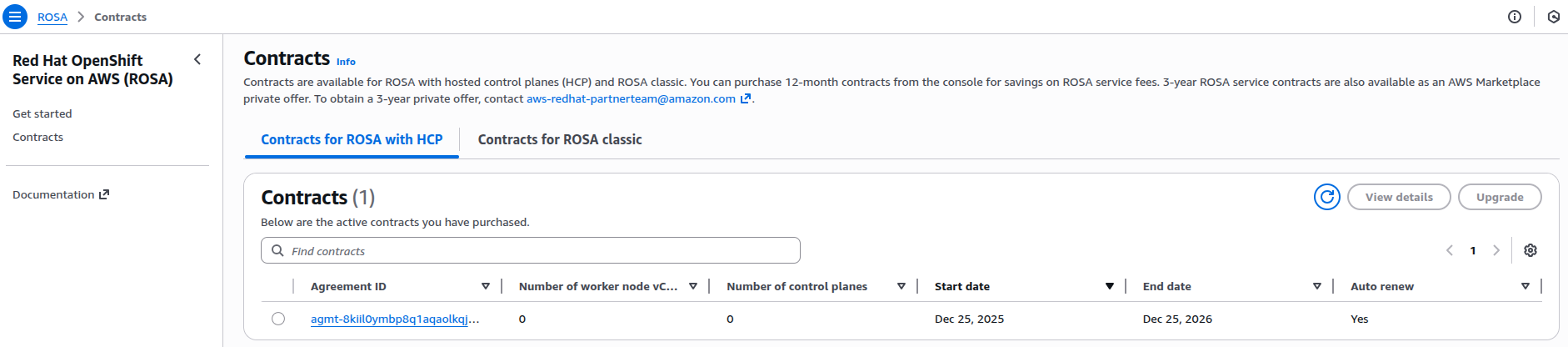 Contracts page showing ROSA with hosted control planes option with consistent terminology
I created console UI microcopy, help panel content, and user documentation in parallel, treating them as components of a unified product experience. The UX Designer created Figma mockups for console workflows, which I reviewed during early-stage design workshops to provide feedback reducing user friction and improving content clarity.
Weekly design workshops over six months with PM, UX Designer, and Console Developer enabled iterative refinement of console microcopy, help panels, and user guides. I drafted UI text and help content, received feedback from UX, PM, and Console Dev, and revised based on usability and design considerations. This collaborative process ensured console help content linked to detailed documentation while documentation reflected console flows.
The process started with cross-company terminology alignment. I organized meetings with AWS and Red Hat product leadership to standardize naming conventions before any design work began. We aligned on “ROSA with hosted control planes” as the official name, using the rationale that “with hosted control planes” was already standard across Red Hat products. This consistency would help customers understand the relationship to Red Hat’s other offerings.
Input sources for content development included:
Over multiple design iterations, I developed UI text for six different states of the ROSA Enablement card on the console homepage. Each state needed to communicate clear status information and actionable next steps using concise language that respected customers’ time while providing necessary context.
The states spanned the complete customer journey: initial not-enabled state explaining what customers gain by enabling, setup in progress with reassuring messaging, successfully enabled with clear next steps to create clusters, and various error states with specific guidance for resolution. The homepage banner welcomed customers to ROSA and explained the value proposition, while the pricing card provided clear explanation of HCP versus Classic pricing models to support customer decision-making.
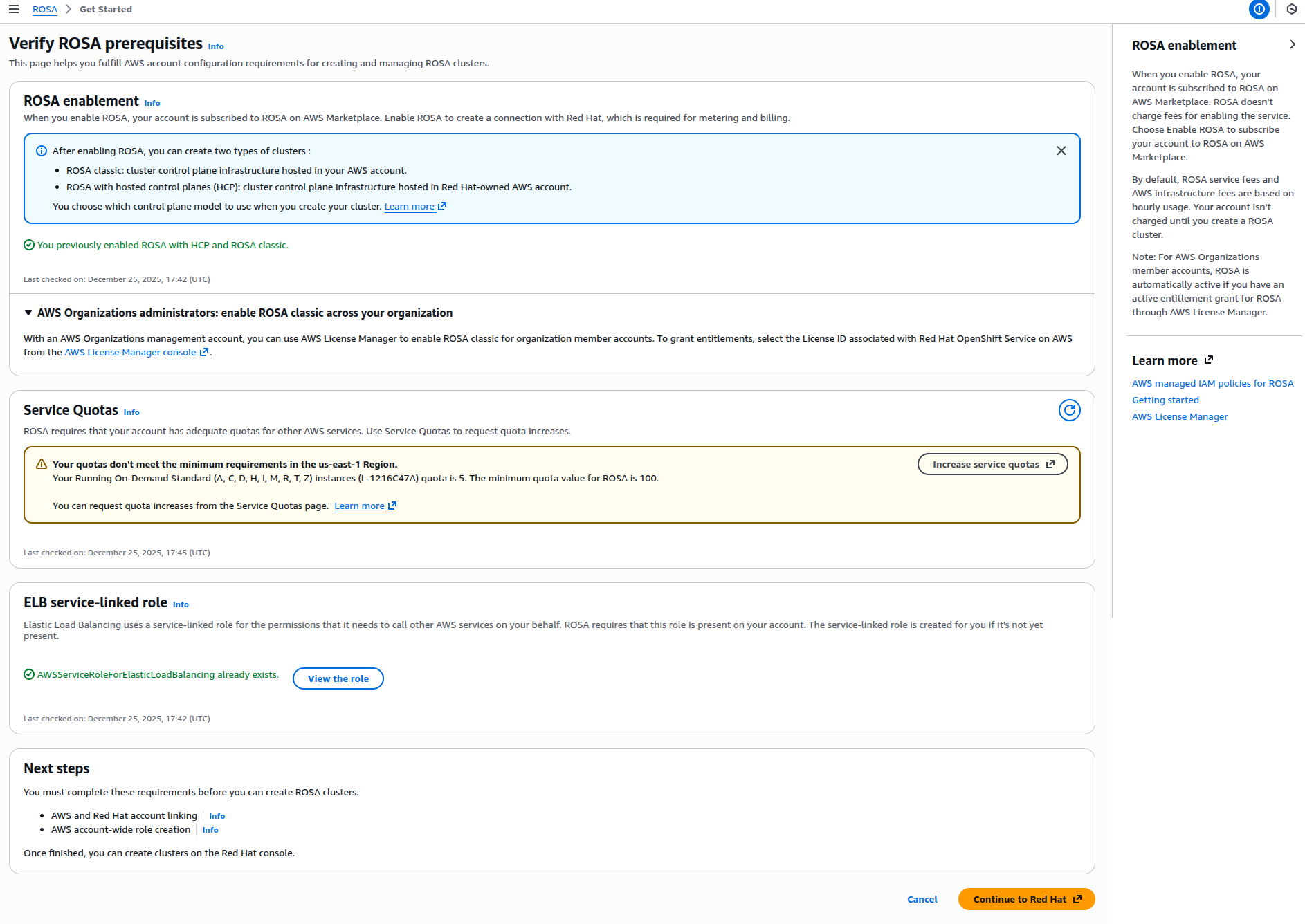 Help panel providing contextual guidance on ROSA enablement requirements
I created help panel content from scratch for this net-new console experience. The help content explained why AWS Marketplace integration is required for HCP, how the billing model differs from Classic, and what prerequisites customers need before enabling. This contextual help answered customer questions at the point of need, reducing the need to navigate away from the console to find basic information.
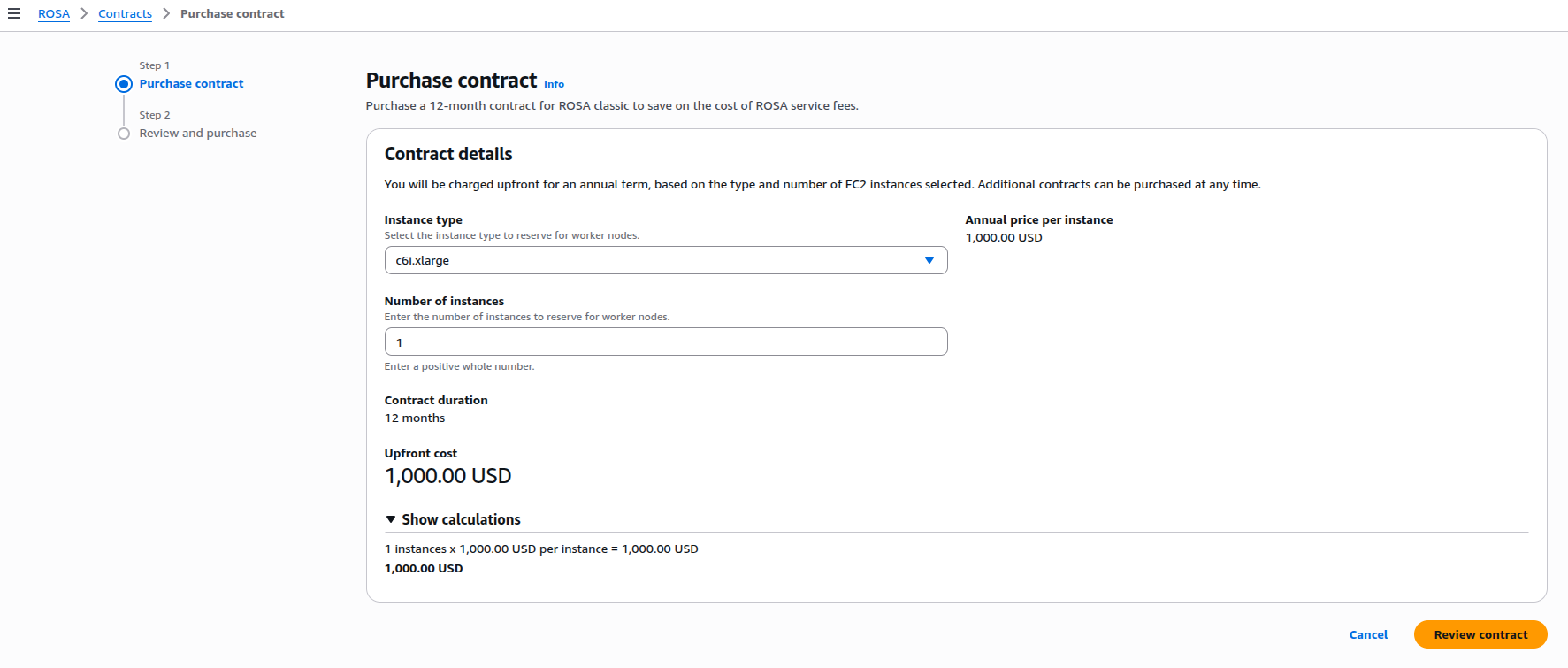 Contract purchase workflow with clear UI text guiding customers through billing setup
While developing console UI, I simultaneously created comprehensive getting started documentation. Documentation was designed as part of the complete product surface, reinforcing terminology introduced in console UI and guiding customers through workflows with consistent language.
I gathered inputs from product teams, UX team, engineering teams, solution architects, and Red Hat partners. Hands-on product testing revealed gaps that weren’t obvious from specifications alone, informing both console design and documentation content.
I provided feedback on Red Hat’s parallel documentation ensuring consistency across the customer journey. For the HCP Quickstart Guide, I reviewed for AWS terminology accuracy and ensured prerequisite alignment with AWS docs. For HCP STS Cluster Creation, I verified AWS service naming conventions and checked VPC requirement accuracy.
Console and documentation shipped on schedule, enabling business launch of a strategically important product offering. The integrated console and documentation approach enabled smooth UX approval with minimal rework required.
Cross-company terminology alignment prevented future confusion across AWS and Red Hat materials. The processes established during this launch became the repeatable template for future ROSA feature releases, reducing coordination overhead for subsequent console and documentation work.
The integrated console and documentation experience reduced customer friction through clear UI text guiding them through the new billing model. Help content clarified HCP versus Classic decision factors at the point of need. Comprehensive documentation supported independent cluster deployment. Unified messaging across AWS and Red Hat materials reduced cognitive load for customers navigating both product surfaces.
Reduced Friction
Clear UI text guided customers through new billing model
Improved Understanding
Help content clarified HCP vs Classic decision factors at point of need
Enabled Self-Service
Comprehensive docs supported independent cluster deployment
Unified Messaging
Consistent terminology across AWS and Red Hat materials reduced cognitive load
Before designing any UI, align cross-functional stakeholders on naming. Inconsistent terminology creates downstream confusion that’s expensive to fix later. The upfront investment in terminology alignment with AWS and Red Hat leadership prevented months of confusion and rework.
Customers don’t distinguish between “console UI” and “documentation” when they’re trying to accomplish a task. They’re navigating a unified product experience. Designing them together creates better outcomes than treating them as separate deliverables that happen to reference each other.
Weekly workshop participation enabled me to provide UX feedback before designs were finalized, understand context informing my content decisions, and build relationships accelerating future collaboration. Being in the room when decisions happened was more valuable than reviewing completed designs.
Build shared understanding of AWS and Red Hat standards through collaborative feedback. Cross-company work requires explaining the “why” behind requirements to build long-term alignment. Teaching AWS style standards to Red Hat partners improved their documentation quality while strengthening the partnership.
Hands-on product testing revealed gaps my documentation needed to address that weren’t obvious from specifications alone. Walking through the actual deployment workflow as a customer would helped me identify missing prerequisites and unclear instructions that I could then address in both console help text and documentation.