Automated Enablement
Prerequisite page eliminated manual verification across multiple AWS consoles
This project demonstrates the development of an automated prerequisite validation experience for the console, as well as getting started documentation for Red Hat OpenShift Service on AWS (ROSA), a managed service for deploying containerized applications with Red Hat OpenShift on AWS. I created UI text and help panels for the new console experience, and getting started documentation for the ROSA User Guide as components of a cohesive Day 1 experience, shipping with console’s launch in Q4 2022.
The work addressed two customer friction points: manual prerequisite verification requiring navigation across multiple AWS consoles and lack of AWS-native getting started documentation. I participated in weekly design workshops with the ROSA PM, UX Designer, Console Developer, and Front-End Engineer through Q4 2022, while creating getting started documentation in parallel through Q3 2022. I also collaborated with Red Hat writers to ensure terminology consistency across both AWS and Red Hat documentation platforms.
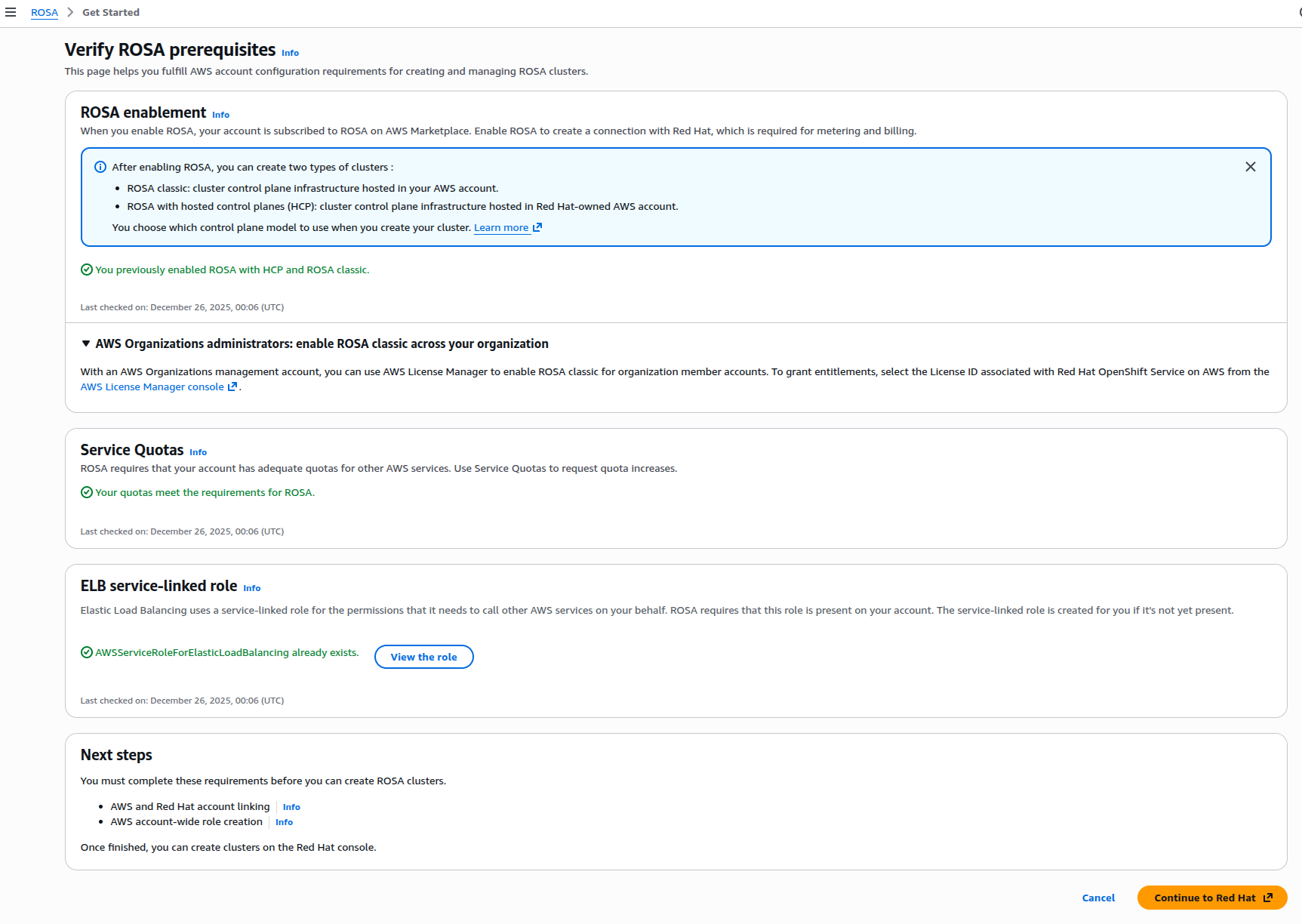 ROSA Get Started page with automated prerequisite validation checking account readiness before cluster deployment
Enabling ROSA required customers to verify their AWS accounts met specific prerequisites for Service Quotas, IAM roles, and ELB service-linked roles before creating clusters. This verification process was entirely manual. Customers had to discover prerequisite requirements through documentation, then check their AWS accounts across multiple consoles. The process provided no proactive visibility into account readiness, leading to deployment failures discovered late when customers had already invested significant time.
Compounding this automation gap, AWS lacked native getting started documentation for ROSA. All Day 0 and Day 1 documentation lived exclusively on Red Hat’s documentation site. ROSA customers, accustomed to finding prerequisite and deployment information in AWS service user guides on docs.aws.amazon.com, encountered navigation friction when forced to look elsewhere. This positioning confusion made ROSA appear less integrated as an AWS-native service than customers expected.
Technical complexity spanning multiple AWS services:
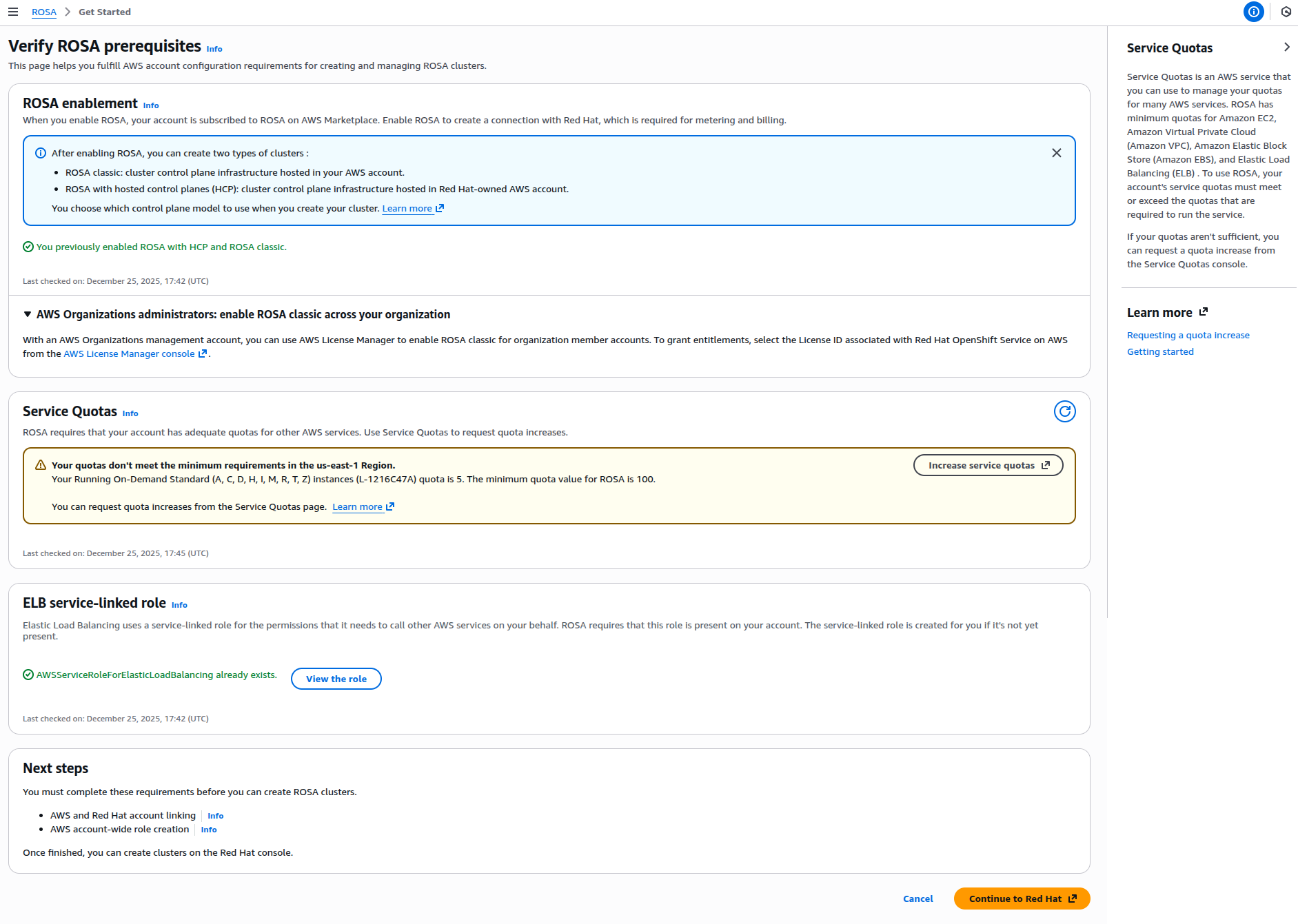 Service Quotas help panel explaining why EC2 and EBS quota limits matter for ROSA cluster creation
The prerequisite validation page needed to check three AWS account requirements automatically: ROSA enablement status, Service Quotas sufficiency, and ELB service-linked role presence. I created UI text and help panels that explained each validation check while showing account readiness status in real-time.
Console improvements:
Help panel system (6 panels):
I created contextualized help panels addressing knowledge gaps for customers coming from on-premises OpenShift who might be unfamiliar with AWS service integrations:
Each help panel linked to detailed documentation for customers needing deeper configuration guidance, creating a natural path from console validation to comprehensive AWS documentation.
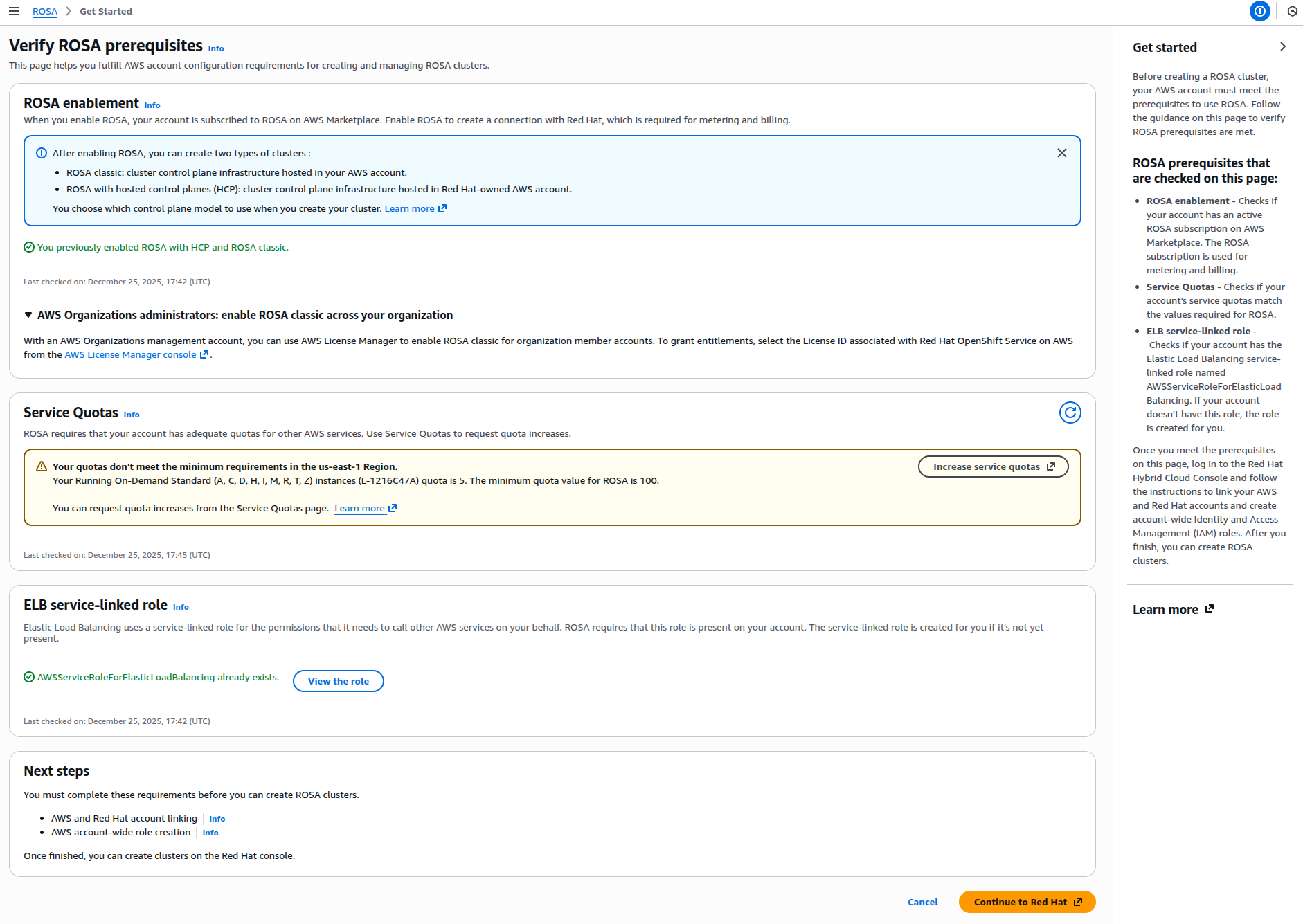 Help panel providing contextual guidance on ROSA enablement prerequisites and automated validation process
While developing console UI text, I created comprehensive getting started documentation for the AWS ROSA User Guide through Q3 2022. This addressed the documentation gap customers experienced when looking for prerequisite and deployment information on docs.aws.amazon.com.
Docs-as-product approach:
Documentation was designed as part of the complete enablement surface, reinforcing terminology and prerequisites introduced in the console UI. Console help panels linked to detailed documentation; documentation reflected console validation checks. This connection ensured customers experienced consistent guidance whether they started in the console or documentation.
Cross-company collaboration:
I worked with Red Hat documentation writers to ensure a unified Day 1 narrative spanning both AWS and Red Hat documentation sets. This collaboration ensured both platforms used consistent AWS service terminology, reducing cognitive load for customers navigating multiple documentation sources during deployment. We aligned on how to describe Service Quotas, IAM requirements, and ELB roles so customers wouldn’t encounter conflicting information.
Information architecture decisions:
I created a getting started landing page directing customers to the appropriate workflow for their use case (CLI-based vs PrivateLink-based deployment). A separate set-up page surfaced all prerequisites in one location, making it easy for customers to verify readiness before beginning deployment. Workflow-specific deployment procedures provided step-by-step guidance tailored to each approach.
Prerequisites documented in the set-up page aligned exactly with in-console validation checks, creating a consistent story. Customers could validate prerequisites in the console, then reference detailed configuration steps in the documentation without encountering conflicting information about what was required.
Console and documentation connection:
Console help panels linked directly to relevant sections in the set-up documentation, providing a clear path from automated validation to detailed configuration guidance. Both surfaces used consistent AWS service terminology, so customers didn’t need to mentally translate between different naming conventions. Customers could self-service through the console, then reference documentation for detailed procedures when needed.
The coordinated console and documentation experience shipped in Q4 2022, creating ROSA’s first complete AWS-native enablement path. The documentation filled a customer-identified gap, providing prerequisite and deployment guidance customers expected to find in the AWS ROSA User Guide. Customers could now discover all necessary prerequisite information on docs.aws.amazon.com, eliminating the friction of hunting across partner documentation sites for foundational enablement information.
This foundation became the base for subsequent ROSA features, including the 2023 HCP billing integration that built upon the same prerequisite validation and documentation framework. The patterns established for automated prerequisite checking and coordinated console-documentation development became the template for future ROSA console work.
Automated Enablement
Prerequisite page eliminated manual verification across multiple AWS consoles
Improved First-Deployment Success
Console validation and documentation guidance increased time-to-first-cluster success rates
AWS-Native Documentation
Getting started resources on docs.aws.amazon.com provided prerequisite and deployment workflows in the location customers expected
Unified Experience
Console help panels and documentation reinforced same prerequisites with consistent terminology
Customers don’t distinguish between console and documentation when trying to enable a service. They’re navigating a unified product experience. Designing console UI and documentation together created better outcomes than treating them as separate deliverables that happen to reference each other. When prerequisites aligned across both surfaces, customers experienced less cognitive load and fewer contradictions.
ROSA customers expected to find prerequisite and deployment documentation in the AWS ROSA User Guide, not exclusively on a partner site. Their experience with other AWS services set this expectation. Meeting customers where they naturally looked for information positioned ROSA more clearly as an AWS-native service and reduced navigation friction that could have discouraged adoption.
Weekly workshop participation enabled me to identify information gaps and suggest UI improvements before designs were finalized. I could propose simplifications and terminology changes when they were still easy to implement rather than after console code was written. Being in the room when design decisions happened was more valuable than reviewing completed mockups where changes would be costlier.
Coordinating with Red Hat writers ensured consistent AWS service terminology across both documentation platforms. When customers navigated between AWS and Red Hat resources during deployment, they encountered the same language describing Service Quotas, IAM roles, and ELB requirements. This reduced confusion and made both documentation sets more trustworthy as sources of accurate information.